A tire can look perfectly healthy across its tread yet hide a serious problem along its sidewall. A small, rounded bulge might appear harmless at first glance, but it can reveal damage beneath the rubber that compromises the tire’s strength. Unlike ordinary surface marks, these deformities deserve prompt attention because they can lead to sudden tire failure.
Taking a closer look at the common causes of sidewall bulges on tires can help you recognize potential hazards before they disrupt your next drive. From unexpected potholes to gradual structural damage, several factors can leave your tires vulnerable. If you notice an unusual bump along a tire’s sidewall, have a tire professional inspect it before you drive again.
What Happens When a Tire Develops a Sidewall Bulge?
Your tire’s sidewall does far more than connect the tread to the wheel. Beneath its flexible rubber exterior lies a network of reinforcing cords that help support the vehicle’s weight and maintain the tire’s shape. These internal components must withstand considerable pressure as the tire flexes against the road.
When some of those cords break or separate, the damaged section loses structural support. Internal air pressure can then push the weakened rubber outward, creating a noticeable bubble or bulge. The surrounding tire might appear normal, but that isolated deformation reveals a potentially dangerous weakness.
Sidewall bulges generally indicate structural damage rather than ordinary wear. Once the reinforcing cords lose their integrity, the tire cannot reliably handle the same forces it once could. That makes a visible bulge a reason to stop using the tire rather than wait for additional symptoms.
Pothole Impacts Can Damage Internal Tire Cords
Few road hazards threaten tire sidewalls quite like deep potholes. When your wheel drops into a depression and strikes its sharp edge, the tire experiences a sudden concentration of force. That impact can pinch the sidewall between the road surface and the wheel rim.
Even a brief collision can damage internal reinforcing cords without leaving an obvious cut. The rubber exterior might remain intact, allowing the problem to escape notice until a bulge appears later. Drivers sometimes discover the damage days after the original impact.
Why Impact Speed Matters
A pothole becomes more destructive when a vehicle strikes it at higher speeds. The tire has less opportunity to absorb the sudden force, and the resulting compression can overwhelm its internal structure. Heavy vehicle loads can add further stress during the collision.
After a harsh pothole impact, inspect your tires as soon as you reach a safe location. Pay particular attention to the sidewalls and rims, even if the vehicle still feels normal. A professional inspection can reveal damage that a casual glance might miss.
Curb Strikes Can Weaken Tire Sidewalls
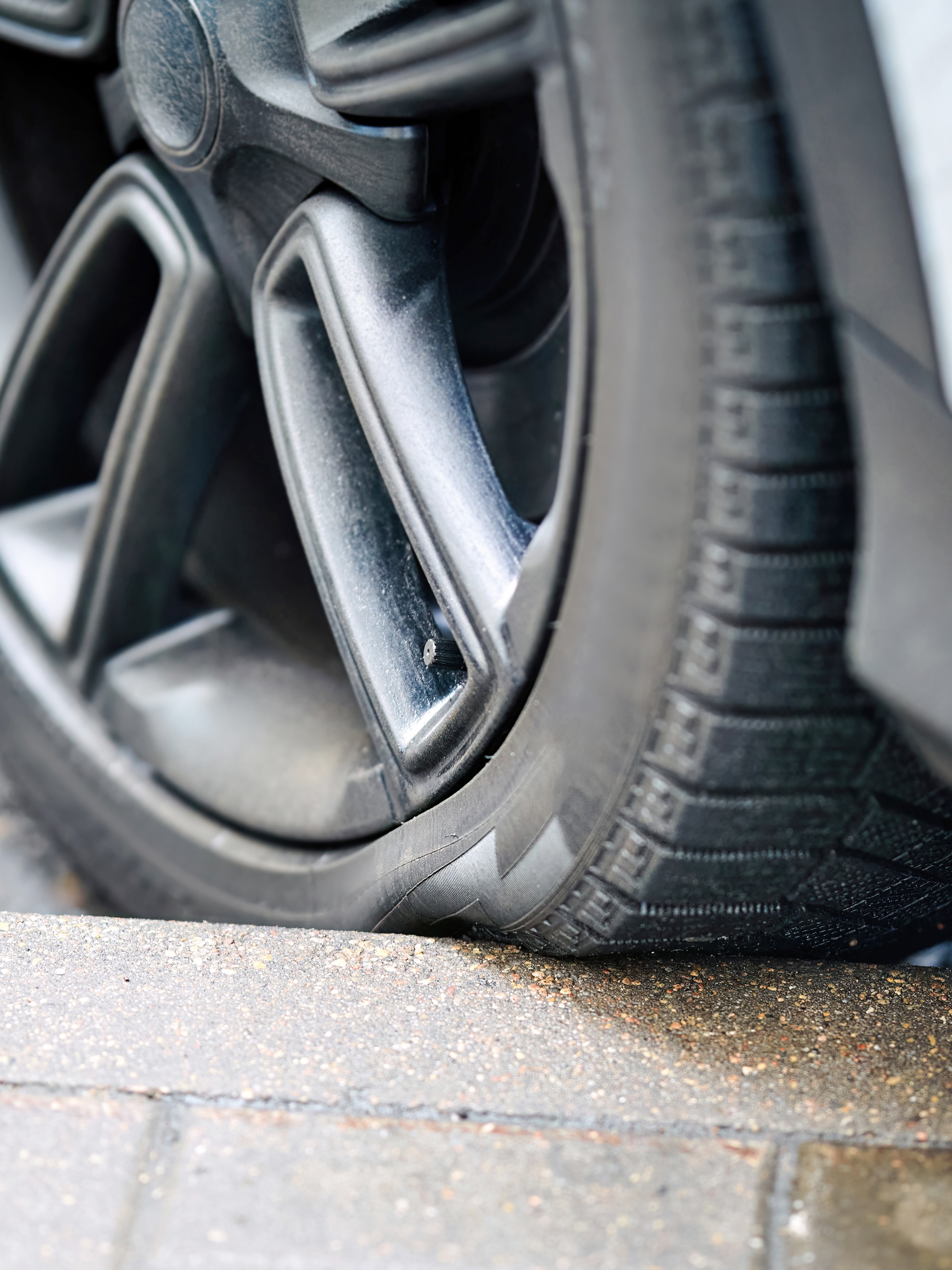
Parking near a curb seems routine until the tire makes forceful contact with the concrete. A hard curb strike can compress the sidewall against the rim or damage the cords beneath its surface. The resulting bulge may appear immediately or become visible after additional use.
The angle of contact influences the severity of the damage. A gentle brush against a smooth curb differs considerably from a sharp collision during a tight turn. Raised concrete edges can concentrate force against a relatively small section of rubber.
Repeated curb contact also deserves attention. Although minor scuffs don’t automatically indicate structural damage, repeated impacts can eventually compromise the tire. Give yourself additional clearance during parking maneuvers, particularly around narrow spaces and elevated curbs. Impact damage also applies to accidents on the road. Make sure you know how to identify tire damage after an accident because sidewall damage is a possibility.
Incorrect Tire Pressure Increases Damage Risks
Tire pressure influences how effectively the sidewall handles everyday road forces. Underinflated tires flex more than intended, placing additional strain on their internal components. Excessive flex can generate heat and gradually weaken the tire’s structure.
Low pressure also leaves less cushioning between the wheel and road hazards. When an underinflated tire encounters a pothole, its sidewall may compress more severely against the rim. This raises the possibility of impact-related cord damage.
Overinflation presents a different concern. Excess pressure can reduce the tire’s ability to absorb certain road impacts and alter its contact with the pavement. Although pressure problems don’t automatically create bulges, they can contribute to conditions that increase damage risks.
Maintain Pressure According to Vehicle Specifications
Check tire pressure when the tires are cold, preferably before your first drive of the day. Use the manufacturer’s recommended pressure from the driver’s doorjamb label or vehicle manual rather than the maximum value printed on the tire.
A monthly pressure check provides a practical starting point, with additional checks before extended trips. Correct inflation helps the tire maintain its intended shape and respond more predictably to road conditions.
Manufacturing Defects Can Cause Sidewall Deformation
Not every sidewall bulge results from a memorable encounter with a pothole or curb. In uncommon cases, manufacturing defects can affect the tire’s internal construction. Problems involving cord placement, material bonding, or structural consistency may contribute to localized weaknesses.
These defects can become apparent after the tire enters service and experiences normal pressure and road forces. A driver might notice an unusual protrusion despite having no recollection of a hard impact. That absence of an obvious cause doesn’t make the condition safe.
A tire specialist can examine the deformation and assess possible causes. If a manufacturing defect appears likely, the tire manufacturer may need to evaluate the product under its warranty procedures. Avoid continued use during that process.
Road Debris and Sharp Objects Can Cause Hidden Damage
Construction debris, broken pavement, and scattered metal can threaten tires beyond the tread area. A sharp object that strikes the sidewall may cut through the rubber or damage its reinforcing cords. Even a relatively small external mark can conceal a deeper structural problem.
Unlike a puncture through the tread, sidewall damage presents particular repair limitations. The sidewall constantly flexes as the tire rotates, so repairs cannot reliably restore damaged structural cords. A tire with a true sidewall bulge requires replacement.
Avoid driving over visible debris whenever you can maneuver safely. After contact with a sharp object, inspect the affected tire for cuts, exposed cords, or unusual contours. Don’t assume the absence of immediate air loss means the tire escaped damage.
Protect Your Tires From Sidewall Damage
Understanding the common causes of sidewall bulges on tires gives you a better foundation for safer everyday travel. Careful driving habits, correct inflation, and routine visual inspections can reduce exposure to preventable damage. Still, even attentive drivers encounter unexpected road hazards, so recognizing a problem early remains valuable. A sidewall bulge deserves professional attention regardless of its size. Address the problem before your next trip so you can return to the road with greater confidence.
Casey is a passionate copyeditor highly motivated to provide compelling SEO content in the digital marketing space. Her expertise includes a vast range of industries from highly technical, consumer, and lifestyle-based, with an emphasis on attention to detail and readability.